Hair is classified into different categories, each requiring specific care. How can you determine your hair type? Let's take a closer look.
Just as there are different skin types, there are different hair types classified by their texture, shape, and other specific characteristics. This helps establish a precise approach to adopting the right hair care routine and keeping your hair healthy.
Discover our hair serum
The different hair types and their characteristics
Straight hair: Straight hair is smooth and has no curls or waves. It falls like a curtain over the shoulders.
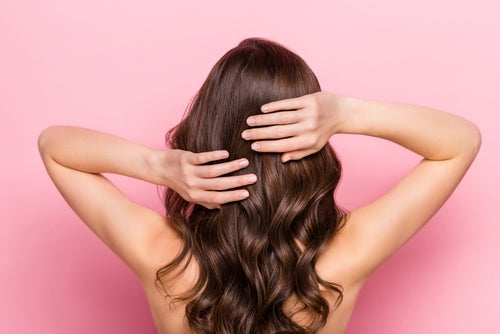
Wavy hair: Wavy hair has a texture between straight and curly hair. Wavy hair forms gentle waves that may be more or less pronounced depending on the person.
Curly hair: Curly hair has wide, defined curls in the form of spirals or tight but soft curls, depending on the hair's natural structure.
Coily hair: coily hair has very tight, coiled curls, creating a denser and more voluminous texture.

Kinky or Afro hair: Kinky hair is extremely curly, often in a Z-shaped pattern, and tends to be very dense and tightly coiled. It can vary in curl size and shape.
In addition to these hair types based on shape, hair can also be classified by thickness:
Fine hair: Fine hair has a smaller diameter and tends to be more delicate.
Medium hair: Medium hair has a diameter that is neither too fine nor too thick.
Thick hair: Thick hair has a larger diameter and is more robust.
Finally, hair can be classified by its porosity level:
Low-porosity hair: Low-porosity hair has tightly closed cuticles and resists moisture absorption.
Medium-porosity hair: Medium-porosity hair has a balanced moisture absorption capacity.
High-porosity hair: High-porosity hair has more open cuticles, making it more likely to absorb moisture but also lose it quickly.
It is essential to understand your hair type, as this will help you choose the products and hair care treatments best suited to your specific needs. Each hair type has unique characteristics and requires a different approach to keep it well-maintained and styled.
Discover our hair serum
How to determine your hair type yourself
Determining your hair type yourself can be really useful for choosing the products and treatments best suited to your specific needs. Here is how you can do it yourself to identify the shape, thickness, and porosity of your hair and create the best hair care routine for you:
1. Determine the shape of your hair (straight, wavy, curly, or coily):
This is probably what is defined from the start. We can see the shape of our hair from childhood, but it may have been hidden for so long that we no longer really know how to define it.
To determine or rediscover the shape of your hair, follow these steps:
° Wash and condition your hair as usual.
° Let your hair air-dry without styling it or using any styling products.
° Observe the natural shape of your hair after it has dried. If your hair is perfectly straight, you have straight hair. If it has gentle waves, you have wavy hair. Defined curls indicate curly hair, and very tight or Z-shaped curls reveal coily hair.
2. Determine the thickness of your hair (fine, medium, or thick):
To assess the thickness of your hair, you can:
° Take a single clean, dry strand of hair between your fingers and feel its texture.
° If the strand of hair is barely noticeable or difficult to feel between your fingers, you have fine hair.
° If you can feel the strand of hair between your fingers, but it does not seem thick or fine, you have medium hair.
° If the strand of hair is clearly thick and easy to feel between your fingers, you have thick hair.
3. Determine the porosity of your hair (low, medium, or high):
Hair porosity refers to its ability to absorb and retain moisture. Here is how to determine the porosity of your hair:
° Take a clean, dry strand of hair.
° Observe the strand of hair to see if there are any small cracks or visible pores on the cuticle (the outer layer of the hair).
° If the cuticle appears smooth and closed, you have low-porosity hair. If it appears slightly open, you have medium-porosity hair. If it appears very open, you have high-porosity hair.
Discover our hair serum

Oily hair, dry hair, or normal hair?
To determine your hair type (oily, dry, or normal), you can consider certain signs and specific characteristics. Here are some clues to help identify your hair type:
Oily hair:
Oily hair tends to become greasy quickly after washing, often within a day or less. You may notice a greasy or oily appearance on the scalp, roots, and sometimes even along the lengths. Oily hair can look heavy, flat, and lack volume. You may also experience an itchy scalp or oily dandruff.
Dry hair:
Dry hair looks dull, rough, and brittle. You may experience frizz and stubborn strands that are difficult to style. Dry hair tends to lack moisture and may be prone to split ends. It needs additional moisturizing care (hair serum, masks, conditioner) to maintain its shine and softness.
Normal hair:
Normal hair looks healthy and balanced. It is neither too greasy nor too dry and is relatively easy to style. You can generally wait a few days before washing it again without it becoming greasy or too dry.
If you are having trouble determining your hair type precisely, try following these steps:
1 - Wash your hair with a gentle, sulfate-free shampoo to remove any buildup of hair products or sebum.
2 - Let your hair air-dry without styling it or using any styling products.
3 - Carefully observe the appearance of your hair after it has dried. If you notice any signs of greasiness or dryness, or if your hair looks healthy and balanced, you will be able to identify your hair type.
Keep in mind that hair type can vary depending on different factors such as the season, climate, use of hair products, and overall health. If you have persistent hair problems or are unsure about your hair type, do not hesitate to consult a hair professional or dermatologist for personalized advice.